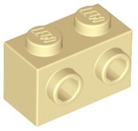
The recent ruling by the Court of Justice of the European Union (C-211/24), dated September 4, 2025, represents an important interpretative clarification in the field of the protection of Community designs, with particular reference to modular systems and construction toys. The case originates from a dispute between LEGO A/S, the historic Danish manufacturer of the famous building bricks, and the Hungarian company Pozitív Energiaforrás Kft., accused by LEGO of placing on the market products that substantially reproduce two designs registered with the European Union Intellectual Property Office (EUIPO). These models concern fundamental structural elements of the LEGO construction system, namely bricks with interlocking joints specifically designed to allow modular interconnection. LEGO took action to obtain sanctions against the Hungarian company, claiming an infringement of its registered Community design rights. The case was brought before the Hungarian court, which suspended the proceedings and referred two questions to the Court of Justice of the EU for a preliminary ruling on the scope and limits of the protection granted to modular designs, in particular in light of the provisions of Articles 8, 10, and 89 of Regulation (EC) No. 6/2002. The heart of the legal debate is therefore Article 8 of Regulation (EC) No. 6/2002, which governs the protection of Community designs. In particular, paragraph 3 of that article introduces an exception to the general rule – not coincidentally, the so-called “Lego exception” – according to which features dictated exclusively by technical function are not protected. This exception allows for the protection of designs that enable the multiple interconnection of interchangeable products in modular systems, as in the case of LEGO bricks. The Court was asked to rule on two preliminary questions. The first concerns the application of the interpretation of the concept of “informed user” (within the meaning of Article 10 of Regulation 6/2002) when assessing the overall impression of modular products. In essence, the question is whether, in addition to assessing the overall visual impression, the technical opinion of the informed user, as a competent person, should also be taken into account with regard to the functional characteristics of the product. The second concerns the scope of the concept of “special reasons” which, according to Article 89(1) of the Community Regulation, may justify the non-issuance of orders against infringement. The above provision stipulates that a Community design court may refrain from issuing sanctions where the infringement concerns only certain elements of a modular system, which are quantitatively insignificant in relation to the whole. On the first point, the Court reiterated its case law, stating that the informed user is not a technical expert, but a person with a high level of knowledge of the sector and a particular interest in the products. The overall impression must therefore be assessed in visual, not technical, terms. This principle is fundamental in order to prevent design protection from becoming a form of technical protection similar to that of patents, maintaining the distinction between the two forms of protection. The Court also emphasized that, even in the case of modular designs, the author’s margin of freedom must be taken into account. The more limited that freedom is, the more minor differences can generate a different impression in the informed user. However, the presence of identical connecting elements may exclude such a difference, strengthening the protection of the original design. On the second point, the Court clarified that the infringement of a few elements of a modular system does not, in itself, constitute a ‘particular reason’ sufficient to avoid the penalties provided for in the Regulation. The concept of “special reasons” must be interpreted restrictively and uniformly throughout the European Union in order to ensure consistent protection of Community designs. This interpretation is consistent with the purpose of the Regulation, which aims to promote innovation and fair competition. The judgment thus prevents owners from abusing protection to hinder the entry of new competitors into the market, especially when the original patents have expired. In conclusion, the judgment in question strengthens the protection of Community designs by clarifying the limits and conditions of protection in the context of modular systems, while maintaining an open and competitive market.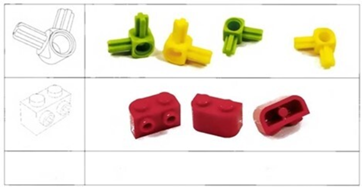

2026 - Morri Rossetti

